
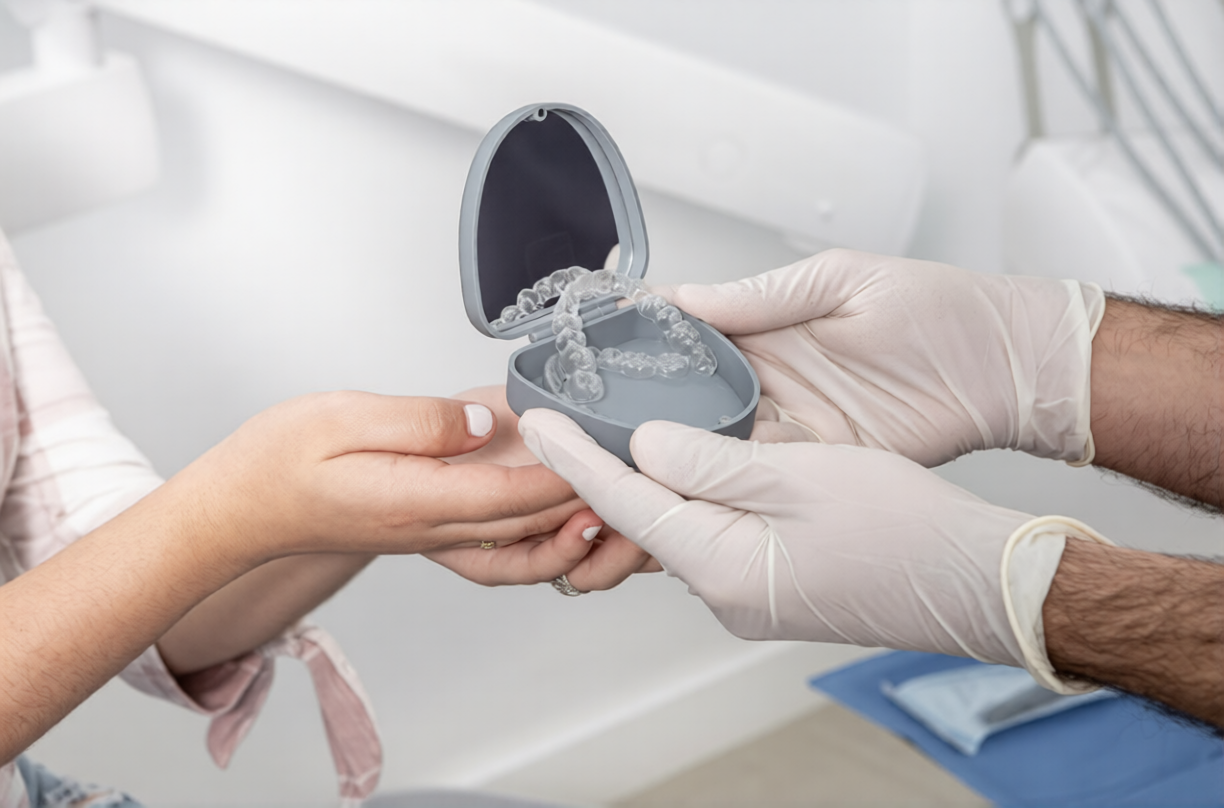
Invisalign® clear aligners are discreet and removable, which is why many people choose them. Like any orthodontic treatment, they also have limits and trade-offs. Knowing about them before you start helps you decide whether Invisalign suits you and what to expect during treatment.
1. You Need to Wear Them Most of the Day
Aligners only work while you wear them. Your dentist will ask you to wear them for about 20 to 22 hours a day. Because they are removable, it is easy to leave them out too long, which can slow your treatment.
How dentists manage it: Your dentist will explain your wear routine and check your progress at regular appointments. If your teeth are not moving as planned, your dentist can adjust your plan.
2. Discomfort When You Change Aligners
Invisalign is generally considered less painful than traditional braces, because there are no metal brackets or wires. Even so, you may feel pressure or soreness for a few days when you start a new set of aligners. An aligner edge can also rub your cheek or tongue.
How dentists manage it: A small amount of dental wax on a rough edge can ease irritation. If discomfort continues, contact your dentist so they can check the fit.
3. Temporary Changes to Your Speech
When you first start wearing aligners, you may notice a slight lisp. This is common while your tongue gets used to the aligners. Most patients adapt within a few days to a week.
How dentists manage it: Practising speaking and reading aloud can help you adjust faster. If speech changes continue, talk to your dentist.
4. Rules Around Eating and Drinking
You need to take your aligners out before eating or drinking anything other than water. You then need to clean your teeth before putting them back in, so food and bacteria are not trapped under the aligners. This takes some planning, especially when you are out.
How dentists manage it: Your dentist will give you instructions for eating, drinking and cleaning during treatment, including how to care for your aligners.
5. Not Every Case Suits Invisalign
Invisalign is effective for mild to moderate crowding, spacing and bite problems. More complex cases may need longer treatment, or may not be suitable for Invisalign at all.
How dentists manage it: Your dentist will assess your teeth and bite before recommending treatment. If Invisalign is not the right fit, they may recommend another option such as fixed braces.
6. Cost and Retainers
Invisalign is a significant investment, and retainers are sometimes not included in the cost. You will need to wear a retainer after treatment to keep your teeth in their new positions.
How dentists manage it: Ask for a written quote that lists what is included. Read How Much Does Invisalign® Cost in Sydney? and see our payment options.
Deciding Whether Invisalign Is Right for You
Every treatment option has benefits and limits. A consultation is the best way to understand both for your teeth. At your Invisalign consultation, your dentist will examine your teeth, explain whether Invisalign is suitable and outline your options. Learn more about Invisalign in Miranda or book an appointment.
Important clinical notice: Any surgical or invasive procedure carries risks. Before proceeding, you should seek a second opinion from an appropriately qualified health practitioner. Results, risks, complications, and recovery time vary significantly between individuals.
Clinic details: Refresh Dental Care Miranda, 187 President Avenue, Miranda NSW 2228 · Mon–Fri 8:00 AM–6:00 PM, Sat 8:00 AM–2:00 PM, Sun Closed · Phone (02) 9525 9220. Experiencing acute pain or swelling? Visit our emergency dentist in Miranda page.