

Understanding the timeline of dental implant treatment is essential for anyone considering this long-term option. Many people find the process daunting, but knowing what to expect can ease anxiety and help with planning.
The dental implant procedure involves several stages, each critical for achieving a successful outcome. From the initial consultation to the final placement of the crown, each phase has its own timeline and importance.
In this blog post, we will guide you through each step of the dental implant process, providing clear and concise information. By understanding the progression and timeline, you will be better prepared for your journey towards a healthier smile. Continue reading to discover detailed insights into each stage of dental implant treatment and how it can benefit you.
Summary of the Content:
- The dental implant procedure involves several stages. Healing and recovery periods are necessary for each phase to promote the success and longevity of the implants.
- Initial surgical placement involves inserting dental implants into the jawbone, which takes about one hour or more, depending on the number of metal posts.
- After tooth implant surgery, the surgical site and surrounding gum tissues experience an initial healing period of about two weeks.
- Following the dental implant placement, there is a required waiting period to allow the tooth implant to fuse with the natural jawbone. This process is called osseointegration, and it generally takes about three to six months.
- Once the dental implant is properly integrated into the jawbone, minor surgery is performed to attach the abutment. This small metal piece connects the tooth implant to the crown, and healing takes about four to six weeks.
- The last phase involves dental crown placement on the abutment, completing the dental implant procedure.
An Overview of the Dental Implant Procedure Timeline
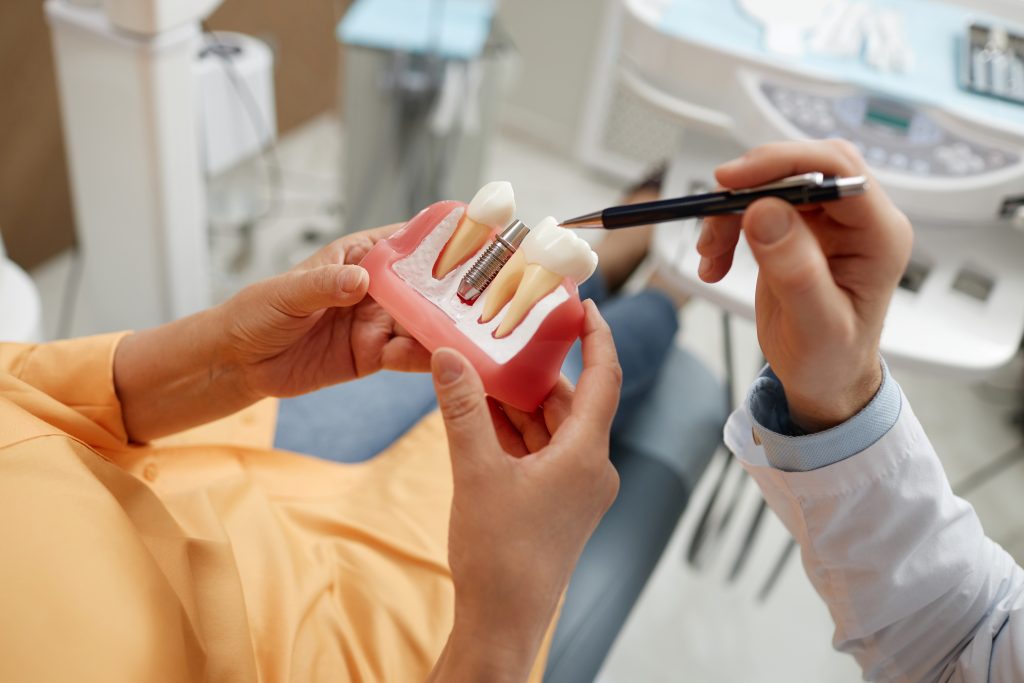
The dental implant procedure involves various phases, each with its own duration, recovery process, and healing period. Understanding these processes helps patients prepare for the dental procedure and set realistic expectations. Here’s an overview of the dental implant treatment timeline:
- Initial Surgical Placement
The journey begins with the initial surgical placement of the dental implants into the jawbone, which serves as artificial tooth roots. The duration of this procedure takes about one hour and more, depending on the number of implant posts. - Recovery Period
After dental implant surgery, there is an initial healing period during which the implant site and surrounding gum tissues recover. This phase usually lasts about two weeks but varies depending on the patient’s healing progress. - Osseointegration
The jawbone and dental implant continue to heal and integrate. This is one of the critical stages in the dental implant treatment timeline, known as osseointegration. Depending on the patient’s case and their healing rates, this phase can take between three and six months. - Placing the Abutment & Taking Impressions for Custom Crown
Once osseointegration is complete, a minor surgery is performed to place the abutment, which connects the implant to the crown. After the abutment has healed, the dentist takes an impression. The process of getting your final impressions or dental scan and waiting for the dental crown to be fabricated usually takes between one to two weeks. However, the process of creating the artificial teeth can also depend on the dental lab’s schedule. - Placement of the Artificial Teeth
The final step is the placement of the custom-made dental crown on the abutment, completing the dental implant process. This appointment is usually scheduled several weeks after the abutment placement.
By understanding the dental implant treatment timeline, patients can better navigate their journey to a restored and confident smile. A dental professional will give you specific guidance throughout the process.
Initial Consultation and Treatment Planning
The initial consultation and treatment planning phase is the first step in dental implant treatment. This appointment usually lasts about 40 to 60 minutes and involves a discussion of the patient’s unique dental needs. This time allows for a thorough evaluation and the customisation of comprehensive treatment plans that address all aspects of the dental implant procedure.
- Reviewing Medical History
The dentist will begin by reviewing your overall health history to determine if there are no underlying conditions that could affect the dental implant surgery. This includes asking about any medications you’re currently taking and past medical procedures. This step is essential to identify any potential risks and prioritise your safety throughout the entire process. - Comprehensive Dental Evaluation
During the appointment, the dentist will conduct a detailed examination of your mouth using X-rays or 3D imaging. This helps in understanding the current state of your jawbone and surrounding soft tissues. - Custom Treatment Plan
Based on the examination and imaging results, your dentist will create a custom treatment plan. This outlines the crucial steps involved in your dental implant treatment and provides an estimated timeline for each phase. - Discussion of the Entire Process
Your dentist will explain the entire process of the dental implant procedure, including the expected timeline and the details of each step. Also, they will discuss the number of dental appointments necessary, anaesthesia and sedation options, post-surgery expectations, and implant aftercare instructions. This visit can be an opportunity for patients to ask questions during this visit.
This initial consultation and planning phase is essential for setting the stage for a successful dental implant treatment. It keeps you fully informed about the treatment process and facilitates all necessary preparations. This aims to help you be well-prepared to move forward with the next steps in your dental implant journey.
Dental Implant Surgery and Initial Recovery
Dental implant surgery involves creating a small incision in the gum to access the jawbone. Then, the dentist carefully inserts the titanium posts into the jawbone to serve as the artificial roots for the new false teeth. After the implant is placed, the gum is stitched back over the implant. A gauze pad is often used to control bleeding and promote initial healing.
The placement of dental implants generally takes about one to two hours, depending on the number of metal posts. The duration can vary depending on the patient’s unique case. Additional procedures, such as bone grafting, can also affect the duration of the dental procedure.
The initial healing time following the first surgical procedure generally lasts three months. During this time, patients may experience swelling, bruising, and minor discomfort. The dentist will provide post-operative care instructions to help manage these side effects and keep the surgical site clean.
Post-operative healing is an important part of the dental implant treatment timeline. Proper care and adherence to the dentist’s instructions during this period can significantly impact the success of the implants. To aid healing, it’s crucial to avoid strenuous activities and follow a soft food diet.
Osseointegration Phase in The Dental Implant Process
Osteointegration is the period where the implant post integrates with the surrounding jawbone tissue, creating a strong foundation for the artificial tooth root. This fusion process provides stability and durability for the tooth implant.
This healing period generally takes three to six months, depending on different factors. Some patients may experience relatively faster integration, while others might require the full six months for complete healing. Listed below are some factors that can influence the progress of osseointegration:
- Jawbone density
- Oral health condition
- Patient’s unique healing response
A successful osseointegration process lays the groundwork for the next steps in the dental implant process. Achieving a stable and durable integration of the implant with the jawbone is essential for achieving a secure foundation for the implant and optimal treatment results.
Abutment Placement and Healing
An abutment is a small metal piece that serves as a connector between the artificial tooth and the dental implant. After a couple of months of healing, the abutment placement is performed and it requires additional minor surgery. During this procedure, the dentist reopens the gum to expose the dental implant. Then, they attach the abutment to the top of the implant post and stitch the gum tissues to promote healing. This minor surgery generally takes about one to two hours, depending on the type or number of dental implants embedded.
The healing period for gum tissues around abutments usually takes four to six weeks. Soft tissue healing around the abutment is essential to prevent infection. During this time, you may experience post-operative pain and swelling, which can be managed with prescribed pain medication and diligent aftercare.
The abutment plays a vital role in the dental implant process. It serves as the connecting piece between the implant post and the artificial crown, providing the necessary support for the final restoration. The stability and alignment of the abutment are crucial for the long-term success of the dental implant and the longevity of the prosthetic tooth. It is also essential for achieving a functional and beautiful smile.
Recognising the importance of the abutment and the healing process can help patients appreciate this critical step in achieving a successful dental implant. This stage sets the foundation for the final placement of the dental prosthesis, bringing you closer to a restored and confident smile.
Impressions and Custom Crown Fabrication
The process of taking dental impressions usually takes about an hour or less. During this appointment, the dentist will place a putty-like material over the abutment to create a precise mould of the abutment and surrounding teeth. This mould captures the precise shape and size of your teeth and gums for the creation of a customised dental crown.
In contrast, impressions can also be taken using a digital scan, which uses advanced imaging technology to capture detailed 3D images of teeth and soft tissues. This method is often quicker, more comfortable, and provides highly accurate data for fabricating the custom crown.
Once the impressions are taken, they are sent to a dental lab, where the custom crown is fabricated. The dental technicians use these impressions to fabricate a crown that matches the colour, shape, and size of your natural teeth. This process allows the final result to blend in with your remaining teeth, providing a natural and aesthetically pleasing appearance.
The fabrication of the custom dental crown can take a few weeks, depending on the lab’s schedule and the specifics of your customised treatment plan. During this time, your dentist will attach a temporary crown to protect the abutment and allow you to eat and speak comfortably.
The precision involved in taking impressions and creating the custom crown is crucial for the success of the dental implant. This stage is vital for the final restoration to be both functional and visually appealing. By adhering to the detailed steps of this phase, patients can achieve a result that enhances their smile and restores their dental health.
Final Crown Placement
The final crown placement is the concluding step in the dental implant process. This phase marks the completion of your dental implant journey, restoring both function and aesthetics to your smile.
During this appointment, the dentist will first check the proper fit of the custom crown and whether it matches the colour of your natural teeth. They will then attach the crown to the abutment, securing it in place. This process usually takes about an hour, allowing the dentist to make any necessary adjustments for a comfortable and precise fit.
The placement of the custom crown involves several key steps:
- Crown Fitting:
The dentist checks the fit and colour of the crown and makes adjustments so they match your other teeth. - Securing the Crown:
The crown is attached to the abutment, providing a stable and durable restoration. - Final Adjustments:
The dentist makes any final adjustments to achieve a proper bite and make the crown or artificial tooth feel comfortable in your mouth.
This final step in dental implant treatment restores dental function and enhances the overall appearance of your smile. With the dental implant process complete, patients can enjoy the benefits of a secure, long-lasting restoration for missing teeth.
Final Thoughts
Navigating the timeline of the dental implant process can seem overwhelming, but breaking it down into its key phases makes it more manageable. From the initial implant consultation and treatment planning to the final placement of the crown, each step is designed to achieve a successful outcome.
Each stage requires specific healing and recovery times to support the success and durability of the implants. Understanding these stages helps patients better navigate their journey and set realistic expectations. The care and precision involved in each phase are vital to achieving a beautiful and functional result.
If you’re considering dental implants, schedule a dental consultation with Refresh Dental Care Miranda. Our team of dentists can provide a personalised treatment plan and an accurate timeline for your dental implant treatment. Contact us today or visit our website to start your journey towards a healthier, more confident smile.
Important clinical notice: Any surgical or invasive procedure carries risks. Before proceeding, you should seek a second opinion from an appropriately qualified health practitioner. Results, risks, complications, and recovery time vary significantly between individuals.
Clinic details: Refresh Dental Care Miranda, 187 President Avenue, Miranda NSW 2228 · Mon–Fri 8:00 AM–6:00 PM, Sat 8:00 AM–2:00 PM, Sun Closed · Phone (02) 9525 9220. Experiencing acute pain or swelling? Visit our emergency dentist in Miranda page.